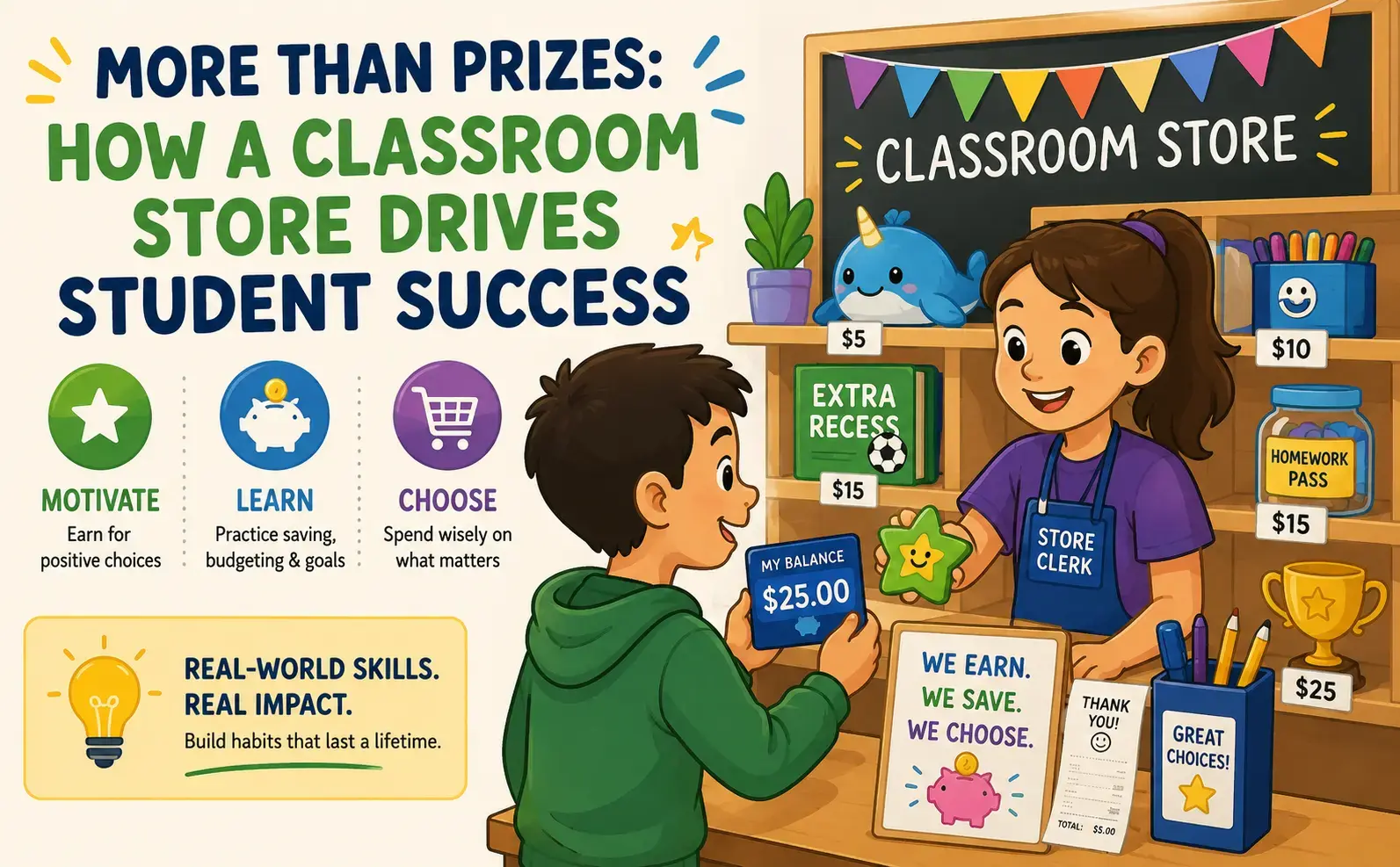
A classroom store is one of the most effective ways to bring a classroom economy to life. It gives students a reason to earn, a goal to save toward, and a real decision to make every time they’ve got money in their account. But the idea can raise a few practical questions:
Who keeps track of what students earn? What rewards actually motivate them? And who has the time to run it all?
Good news: none of it has to be complicated. Here’s why a classroom store works, and how to launch one in your room — or across your whole school — without drowning in spreadsheets.
Why a Classroom Store Works
A well-run store turns abstract expectations into something students can see, want, and work toward. It’s the part of the classroom economy where everything connects: behavior, money, and choice.
Here’s what a good store delivers:
- Consistency students can count on. When earning and spending follow the same clear rules every day, expectations become predictable. Students know what’s rewarded and what it’s worth, which makes the whole system feel fair.
- Reinforcement that sticks. A structured loop of earning school dollars and spending them on things they actually care about keeps students engaged far longer than a one-off prize ever could.
- Real-world learning. This is where a store earns its keep. As students weigh whether to spend now or save for something bigger, they practice budgeting, goal-setting, and trade-offs — the exact decision-making skills that carry into adult life.
That last point is the heart of it. A store isn’t just a prize cabinet; it’s a financial-literacy lab where the lessons happen to be fun.
Let the System Do the Tracking
The fastest way to abandon a classroom store is to try to run it on paper. With Fun Banking, the tracking takes care of itself:
- Students log in with a secure PIN and see their real-time balance before they decide to buy.
- Your integrated school store lets them browse items, make purchases, and get a digital receipt automatically.
- You track inventory and watch sales trends as they happen, so you know what’s popular and what to restock.
- Insights and analytics show you how students across the class are spending, saving, and earning — useful data when you’re planning what to offer next.
No tally sheets, no shoebox of tickets, no manual math at the end of the week.
Put Students in Charge
One of the best ways to lighten your load is to hand part of the store over to your students. With automated payroll, you can pay students for classroom jobs — including running the store itself. Hire a “Store Clerk” to manage purchases, or a banker to help classmates check balances. Students build leadership and responsibility, and you get time back. As the structure settles in, the store starts to run itself.
And if you’re rolling this out beyond a single room, classroom collaborators let co-teachers and substitutes keep things moving on coverage days, while multi-teacher schools extend the full toolkit across a whole faculty so a grade level or building can run one consistent economy.
Getting Started: Launch Your Store in Four Steps
You don’t need a big rollout to begin. These steps will get a store up and running without overwhelming you:
1. Pick a few behaviors to reward. Start with two or three things you want to see more of — arriving on time, helping a classmate, staying on task. If your school already uses a PBIS or expectations framework, borrow from it. If you’re starting fresh, that’s fine too.
2. Stock a handful of rewards. You only need a few to start, and the best ones often cost nothing: extra recess, flexible seating for a day, line-leader, a homework pass, or a small low-cost prize. Mix in a couple of bigger-ticket items students can save toward.
3. Ask for input. Don’t guess what motivates your students — ask them. Invite teachers to suggest rewards they’re willing to offer, and reach out to families or local businesses for donations. Student buy-in goes up fast when they helped build the list.
4. Set a consistent time to spend. Pick a predictable rhythm — once a week or once a month works well. A set “store day” builds anticipation and gives savers a clear finish line to aim for.
⚡ Pro tip: Add a savings goal to the mix. When students can park money in savings and watch it grow toward a bigger reward, you turn an ordinary purchase into a real lesson in patience and planning.
Ready to Open Your Store?
A classroom store is where behavior, engagement, and financial literacy come together — and with Fun Banking, it’s simple to set up and easy to keep running. The free plan lets you launch a store in two classrooms with no credit card required, so you can try it before you commit to anything.
👉 Start free with Fun Banking · See all features · Compare plans
Fun Banking is a classroom banking simulator — no real money, accounts, or financial services are involved.